
Sometimes, when I meet a new family in my therapy room, I can sense what they’re carrying before a single word is spoken. It’s in the way they hold their child a little tighter, or how their eyes search mine, waiting for reassurance. Sooner or later, one question comes out — quietly, almost like a whisper:
“Why did my child develop autism?”
I’ve heard this question hundreds of times, and every single time, it still touches me. Because behind it lies love, fear, guilt, and a deep need to understand. And as a therapist who’s worked with many children on the autism spectrum, I’ve learned that this question doesn’t have a single, simple answer.
Autism isn’t something that happens to a child. It’s something that’s part of who they are — woven into how their brain sees, hears, and experiences the world.
The Brain’s Beautiful Complexity
When we talk about autism, we’re really talking about brain development — and no two brains are ever exactly alike. Science now sees autism as a neurodevelopmental difference, not an illness or a flaw.
Children with autism often experience the world in vivid and unique ways. Some notice the tiniest patterns others miss; some feel sounds or textures more deeply. Many struggle with communication, yet express emotions through gestures, art, or play in ways that words could never match.
So before we talk about causes, I always remind parents — this isn’t about finding something “wrong.” It’s about understanding how your child’s brain works differently, and how we can meet them there.
What We Know About Genetics
Over the past decade, research has shown that genetics play the strongest role in autism. But it’s not as simple as “one gene causes autism.” Instead, it’s a mix of hundreds of small genetic variations that influence how the brain connects and grows.
In some families, autism seems to run through generations. In others, it appears out of nowhere. That’s because these genetic factors can quietly combine in countless ways. It doesn’t mean something went “wrong.” It simply means that your child’s brain followed a slightly different blueprint — one that makes them beautifully unique.
And here’s something important to hold on to: genes are not fate. They shape possibilities, not certainties.
The Environment’s Subtle Role
Now, let’s talk about environment — because this is where a lot of confusion and fear come in. Many parents have read or heard things online linking autism to vaccines, food, or parenting.
Let’s be absolutely clear: vaccines do not cause autism. That theory has been studied, disproven, and retracted for years.
However, there are some subtle environmental factors that might influence how those genetic tendencies express themselves — like certain infections during pregnancy, complications during birth, or the mother’s overall health. These are not causes in isolation; they’re more like tiny pieces in a much larger puzzle.
Autism begins very early — often before a baby is even born. By the time a child enters the world, their brain already has a rhythm of connection that makes them who they are.
Shifting from “Why” to “What Now”
I always tell parents: understanding the cause is helpful, but it’s not the end goal. What truly matters is what we do next.
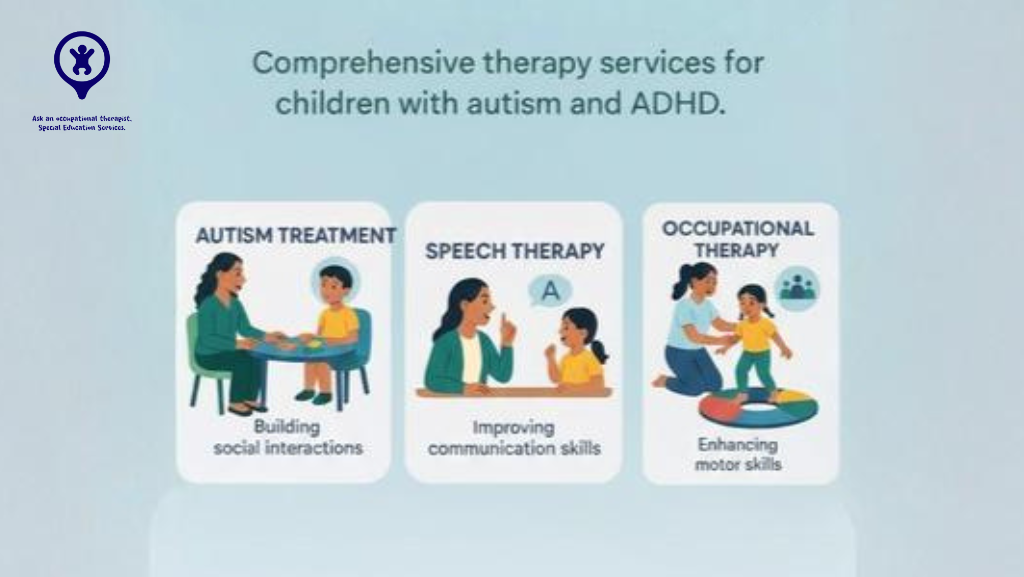
Therapies like occupational therapy, speech therapy, ABA, or sensory integration aren’t about changing a child’s nature. They’re about helping them feel safe, comfortable, and capable in their own bodies. They help children find ways to connect, to express, and to enjoy being part of a world that often moves too fast or feels too loud.
And when parents shift from “Why did this happen?” to “How can I support my child?”, something powerful happens. The weight begins to lift. They start noticing small victories — a new word, a shared laugh, a quiet moment of connection.
Those moments are everything. They remind us that growth doesn’t come from finding blame. It comes from understanding, patience, and love.
What Science Still Doesn’t Fully Understand
Even with all the progress we’ve made, there’s still so much science is trying to uncover. We’re learning more about how early brain development, gut health, and sensory processing all tie together. But one thing is clear: autism isn’t one condition with one cause — it’s many unique paths under one name.
Every child teaches us something new about how flexible and extraordinary the human brain really is.
A Therapist’s Reflection
After all these years, I’ve realized that parents aren’t really looking for scientific details — they’re looking for peace. They want to know they didn’t do something wrong. And I tell them, with complete honesty: you didn’t.
Autism isn’t your fault. It’s not anyone’s fault. It’s simply one of the many ways the human brain can grow.
At our center here in Islamabad, we don’t try to “fix” children — we help them flourish. We create a space where they can explore safely, learn at their own pace, and build skills that help them feel confident in who they are. Because every child deserves that.
Understanding autism isn’t about finding a cause — it’s about finding connection.
And when that connection happens — even for a moment — that’s where real growth begins.
Final Thoughts
Science tells us a lot about the causes of autism, but the heart teaches us more. It teaches us that children with autism don’t need to be changed — they need to be understood.
So if you’re a parent reading this, please take a breath. You’re doing better than you think. The “why” may never have a clear answer, but the “what now” is full of hope.
Visist AskAnOt Islamabad