
When you’re a parent, you often know something is “off” long before anyone else says it out loud.
Maybe your child isn’t talking as much as other kids their age.
Maybe they get overwhelmed easily.
Maybe daily things—getting dressed, holding a spoon, following simple instructions—feel harder than they should.
At that point, most parents start searching. You read articles. You ask other parents. And very quickly, you’re surrounded by unfamiliar terms like ABA therapy, Speech Therapy, and occupational therapy. It’s confusing, and honestly, a little scary.
If you’re feeling unsure about which therapy your child needs, you’re not alone. And no—there isn’t one “correct” answer for every child.
Let’s talk about this in a simple, real way.
First, Take a Breath
Before we compare therapies, one thing matters more than anything else:
Your child is not broken.
Needing therapy doesn’t mean failure. It means support.
Children develop differently. Some need help with communication. Others need help with behaviour, focus, or sensory processing. Therapy is simply a tool to guide them—at their pace.
What Is ABA Therapy, Really?
ABA therapy (Applied Behavior Analysis) focuses on behaviour and learning patterns. It looks closely at why a child behaves a certain way and then gently works on teaching more helpful alternatives.
This therapy is most commonly associated with children on the autism spectrum, but it can also support children with behavioural challenges or developmental delays.
ABA Therapy Often Helps With:
- Frequent meltdowns or aggressive behaviour
- Difficulty following instructions
- Trouble with routines
- Limited social interaction
- Building attention and learning skills
ABA sessions are structured, consistent, and repetitive. Some children respond very well to this clear, step-by-step approach.
When ABA May Be a Good Choice
If your child:
- Has autism or suspected autism
- Struggles with behaviour regulation
- Finds change and transitions extremely difficult
ABA therapy can provide structure and predictability, which many children need to feel safe.
What Does an Occupational Therapist Actually Do?
This is where many parents get confused.
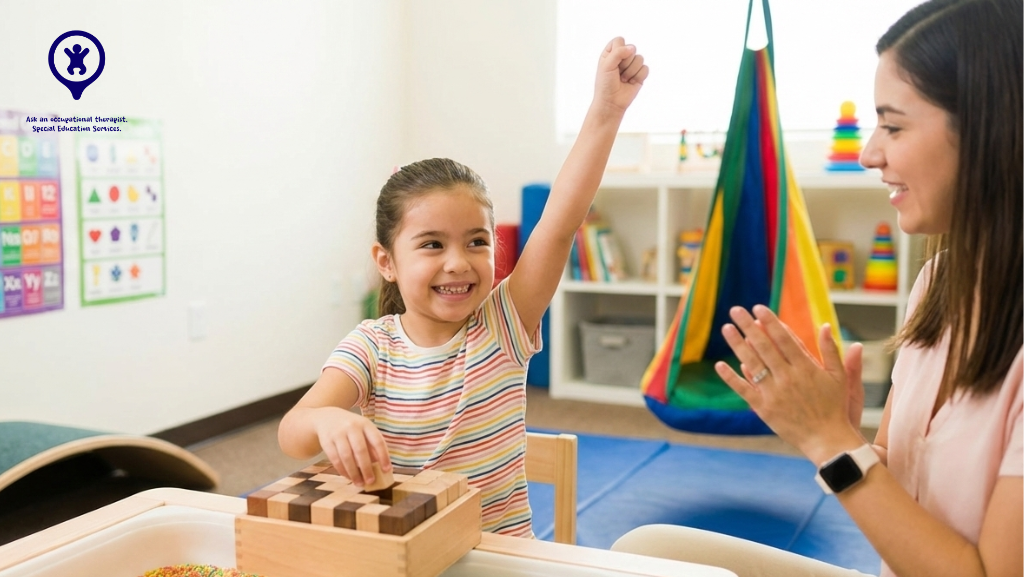
Occupational therapy is not about jobs. It’s about helping a child function independently in daily life.
If you’ve been searching for an occupational therapist in Islamabad, chances are your child struggles with things other kids seem to do naturally.
Occupational Therapy Focuses On:
- Fine motor skills (writing, gripping, buttoning clothes)
- Gross motor skills (balance, coordination)
- Sensory processing (overreacting to noise, touch, textures)
- Emotional regulation
- Daily self-care routines
An occupational therapist looks at the whole child. Not just one skill, not just one problem.
Parents who work with AskanOccupational Therapist often notice improvements not only in skills, but also in confidence and emotional stability.
OT May Be Right If Your Child:
- Avoids certain sounds, foods, or clothing
- Gets overwhelmed easily
- Has weak handwriting or poor coordination
- Struggles with daily routines
OT is often subtle, but its impact shows up in everyday life.
Understanding Speech Therapy Beyond “Talking”
Many people think Speech Therapy is only for children who don’t speak. That’s not true.
Speech Therapy helps children communicate—whether through words, gestures, sounds, or social interaction.
Speech Therapy Helps With:
- Late talking
- Unclear pronunciation
- Understanding instructions
- Expressing needs and emotions
- Social communication
Some children can speak but still struggle to communicate. Speech Therapy helps bridge that gap.
Speech Therapy May Help If Your Child:
- Uses very few words
- Can’t express needs clearly
- Gets frustrated when trying to communicate
- Has difficulty interacting with others
Speech Therapy can be life-changing, especially when started early.
ABA vs OT vs Speech Therapy: What’s the Difference?
Here’s the simplest way to think about it:
- ABA therapy works on behaviour and learning
- Occupational therapy works on daily life skills and sensory regulation
- Speech Therapy works on communication
None of these therapies replace the others. They complement each other.
Can a Child Need More Than One Therapy?
Yes—and very often, they do.
A child might:
- Receive ABA therapy for behaviour
- Work with an occupational therapist in Islamabad for sensory and motor skills
- Attend Speech Therapy for communication
This combination is common, especially for children with autism or developmental delays.
Clinics like AskanOccupational Therapist often collaborate with speech and behavioural specialists to create a plan that actually fits the child—not just the diagnosis.
How Do You Decide What’s Right?
Here’s what helps most parents:
1. Watch Your Child, Not Other Kids
Comparison creates anxiety. Focus on your child’s challenges and strengths.
2. Get a Proper Assessment
A qualified occupational therapist, speech therapist, or ABA professional can guide you based on observation—not assumptions.
3. Start Where the Biggest Struggle Is
If communication is the main issue, start with Speech Therapy.
If daily skills or sensory issues are the problem, OT may come first.
If behaviour is affecting learning and safety, ABA therapy might be needed.
4. Trust Your Instincts
The right therapy should feel supportive, not overwhelming—for both you and your child.
A Final Word to Parents
Choosing therapy is not about labels or pressure. It’s about giving your child the tools they need to navigate the world with confidence.
Whether that means ABA therapy, Speech Therapy, or working with a trusted occupational therapist in Islamabad, what matters most is early, compassionate support.
With the right professionals—like AskanOccupationalTherapist—and your love and patience, progress will come. Maybe slowly. Maybe quietly. But it will come.
And that’s enough.