
Most parents don’t start this journey with medical terms or clear questions.
It usually begins with a feeling.
Something feels different, but you can’t quite explain it.
Your child may be quiet. Or maybe they talk a lot but don’t really connect. Maybe they don’t answer when you call their name, or they get upset over things that seem small to others. At first, you wait. Family members tell you not to worry. “Boys talk late.” “Every child is different.”
Still, the worry stays.
That’s when many parents ask this question:
Can a psychological evaluation help diagnose autism in children?
The honest answer is yes — and for many families, it becomes the turning point.
Autism Is Not a One-Day Diagnosis
One thing parents should know early on: autism is not diagnosed in five minutes. There is no single test that gives instant answers.
Autism is identified by looking at patterns.
How a child communicates.
How they play.
How they react to people, sounds, routines, and change.
A psychological evaluation helps bring these patterns together in a structured way instead of leaving parents stuck with guesses.
What a Psychological Evaluation Really Looks Like
Many parents imagine an evaluation as something very formal or scary. In reality, it often looks quite simple from the outside.
The psychologist may sit on the floor and play with the child.
They watch how the child responds.
They ask parents questions — sometimes many questions — about daily life.
There may be forms, yes. But a lot of the assessment happens through observation. The goal is not to judge the child, but to understand them.
This kind of evaluation is especially helpful for children who cannot clearly explain their thoughts or emotions.
Can a Psychologist Diagnose Autism Alone?
In some cases, yes. A qualified psychologist trained in autism assessments can diagnose Autism Spectrum Disorder.
But in real life, the best results come from teamwork.
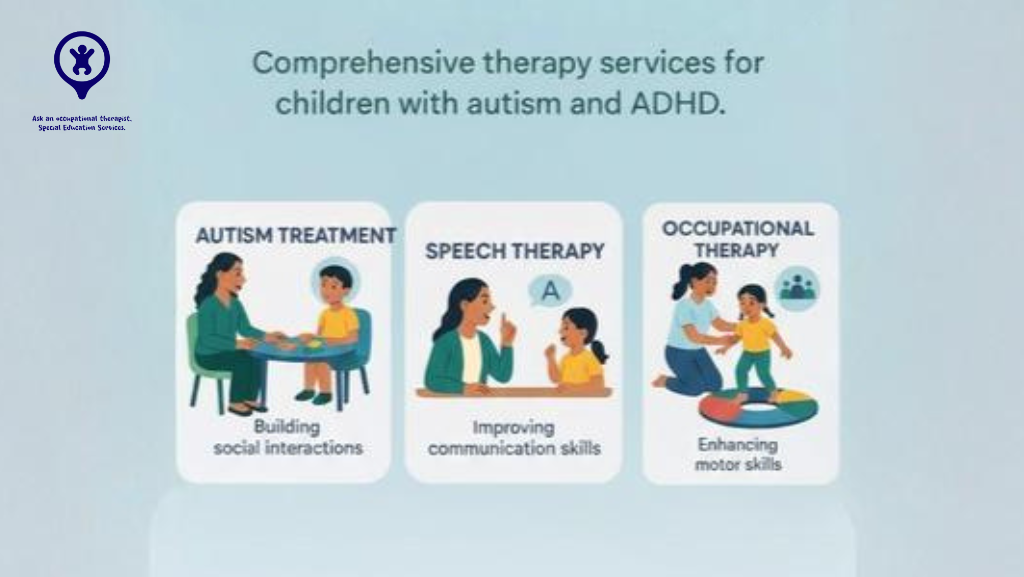
Autism affects many areas at once — speech, movement, emotions, sensory responses, daily skills. That’s why centres like AOT Islamabad usually combine psychological evaluation with occupational therapy and speech assessments.
This approach gives parents a clearer picture, not just a label on paper.
Why Parents Hesitate — And Why That’s Normal
Let’s be honest. Many parents delay evaluations because they’re scared of what they might hear.
Some worry about stigma.
Some fear their child will be treated differently.
Some hope things will improve on their own.
These feelings are very real, especially in our culture.
But a psychological evaluation does not change your child. It only changes your understanding of them. And that understanding can be life-changing.
What Happens After Autism Is Identified?
This is where many parents feel relief — even if they didn’t expect to.
Because now there is a direction.
After diagnosis, therapy usually begins. Occupational therapy is often one of the most important parts of that journey. Parents searching for the best occupational therapist are usually looking for help with everyday struggles — not just exercises.
Occupational therapy supports children with:
- Sensory overload
- Emotional regulation
- Attention and focus
- Daily skills like dressing, eating, and play
At AOT services Islamabad, therapy plans are built around the child, not copied from a standard program.
About “Autism Cure Schools” and Common Confusion
Many parents search online for things like autism cure school E11 Islamabad. This comes from hope — and sometimes desperation.
Autism does not have a cure. But that does not mean there is no improvement.
With early diagnosis, therapy, and the right environment, many children learn to communicate better, manage emotions, and become more independent.
An awareness centre for autism Islamabad helps parents understand realistic goals and long-term progress instead of false promises.
When Should You Consider an Evaluation?
You don’t need extreme signs.
Parents often seek evaluation because:
- Speech is delayed
- Social interaction feels different
- The child avoids eye contact
- Meltdowns seem intense or frequent
- Sensory sensitivities affect daily life
If you are constantly wondering, that alone is a sign it may be time to seek clarity.
The Emotional Side No One Prepares You For
What parents don’t talk about enough is how heavy the uncertainty feels.
Not knowing is exhausting.
Questioning yourself is exhausting.
Most parents who go through a psychological evaluation say the same thing afterward:
“I finally understood my child.”
That understanding changes how you respond, how you teach, and how you support your child every day.
Why Early Evaluation Matters
The earlier autism is identified, the earlier support can begin.
Early therapy often leads to:
- Better communication
- Improved emotional regulation
- Stronger daily living skills
- Smoother school transitions
Centres like AOT Islamabad focus not only on the child, but also on guiding parents through the process with patience and honesty.
Final Thoughts
So, can a psychological evaluation help diagnose autism in children?
Yes — and more importantly, it helps families move forward instead of staying stuck in doubt.
It doesn’t take anything away from your child.
It gives them access to support.
And it gives parents peace of mind.
Seeking evaluation is not giving up.
It’s showing up for your child — fully, bravely, and early.