
Every parent of a child on the autism spectrum has probably had this moment — your child is finally calm, not overwhelmed, not mid-meltdown, and they are completely absorbed in a tablet or phone screen. There is this quiet relief that washes over you. And then almost immediately, the guilt sets in. Am I doing the right thing? Is this too much? Is the screen making things worse? It is one of the most common questions that comes up when families first visit an awareness centre for autism in Islamabad, and honestly, it deserves a real and thoughtful answer — not just a number of hours pulled from a generic parenting guideline.
Why Autism and Screen Time Is a Different Conversation
When you look up screen time guidelines online, almost everything you find is written for neurotypical children. They talk about social displacement, reduced physical activity, and attention span. But for children on the autism spectrum, the picture is far more nuanced. Many children with autism are drawn to screens in ways that go beyond typical childhood preferences — and understanding why is the first step. Research published in JAMA Network Open highlights that children with ASD often show a heightened attraction to digital media, partly because it offers predictability, low social demand, and a controlled sensory environment. For a child already working through sensory overload daily, that predictability genuinely feels safe.
This is something every autism specialist in Islamabad needs to understand when advising families — blanket rules simply do not work here. The way a child with autism engages with a screen is often qualitatively different from how their siblings use the same device. It can be deeply focused, even therapeutic in some moments. But it can also quietly become a loop that pulls them away from the skill-building they need most.
What the Research Actually Tells Us
A study published in Frontiers in Psychiatry found that excessive, unstructured screen time in children with ASD was associated with increased repetitive behaviours and reduced social engagement. That is significant — and it is relevant to how we approach therapies for autism in Pakistan. It does not mean screens are harmful on their own. It means unstructured, prolonged screen time with no therapeutic intention may reinforce some of the very patterns that occupational and behavioural therapy works hard to gently redirect.
Additional research from the National Institutes of Health (PMC) found that the type and context of screen use mattered far more than the raw number of minutes logged. Interactive content — where a child responded, made choices, or communicated — produced considerably better outcomes than passive viewing. This is a distinction that the best autism centers in Islamabad are increasingly building into their therapy frameworks. Screen use can actually be a therapeutic tool, when it is intentional.
Signs That Screen Time May Be Becoming a Problem
There is no single number that works for every child. Some children with autism can engage with screens for short periods and transition away without significant distress. Others become dysregulated the moment a device is removed. At a quality best autism center in Islamabad, therapists tend to look less at the clock and more at the behavioural patterns around screen use. Some signs worth paying attention to:
• Extreme distress or meltdowns when a screen is taken away — beyond typical childhood protest
• Noticeable regression in communication, especially if screen content is not language-rich
• Increased stimming or repetitive behaviours that mirror content from the screen
• Reduced interest in previously enjoyed sensory, physical, or play-based activities
• Difficulty connecting with family members compared to their engagement with devices
If you are noticing several of these patterns consistently, it is worth discussing with a professional. As Autism Parenting Magazine rightly points out, families should pay attention to what happens around screen time — the transitions, the mood beforehand, the recovery period after — rather than fixating purely on the number of minutes.
The Role of Sensory Integration in Screen Preferences
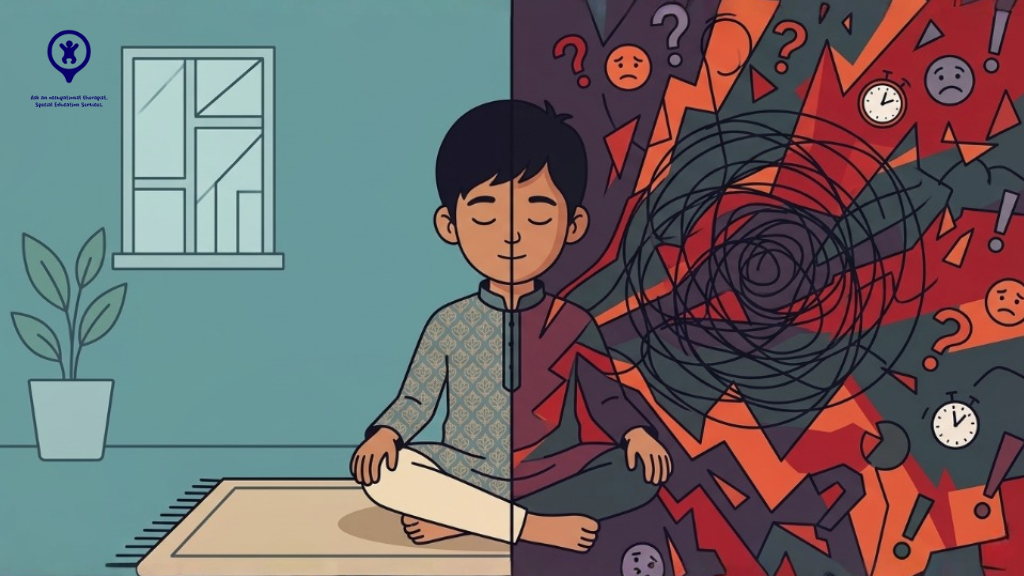
One thing that often gets lost in the screen time conversation is the sensory component. Many children with autism gravitate toward screens because of the visual and auditory stimulation they provide — the consistent brightness, the movement, the predictable rhythm of sound. From a sensory integration therapy perspective in Islamabad, this makes complete sense. The sensory environment of a screen is controlled and predictable in a way the real world rarely is.
Occupational therapists who specialise in sensory integration therapy in Islamabad often work with families to understand what specific sensory experience the child is seeking through the screen — is it the visual tracking? The auditory pattern? The slight vibration of the device in their hands? Once that is clear, therapists can start offering more embodied alternatives — swinging, deep pressure activities, rhythmic movement — that meet the same sensory need without the downsides of prolonged passive screen use. This is not about eliminating screens entirely. It is about understanding them as one piece of a much larger sensory picture.
Building a Screen Time Framework That Actually Works
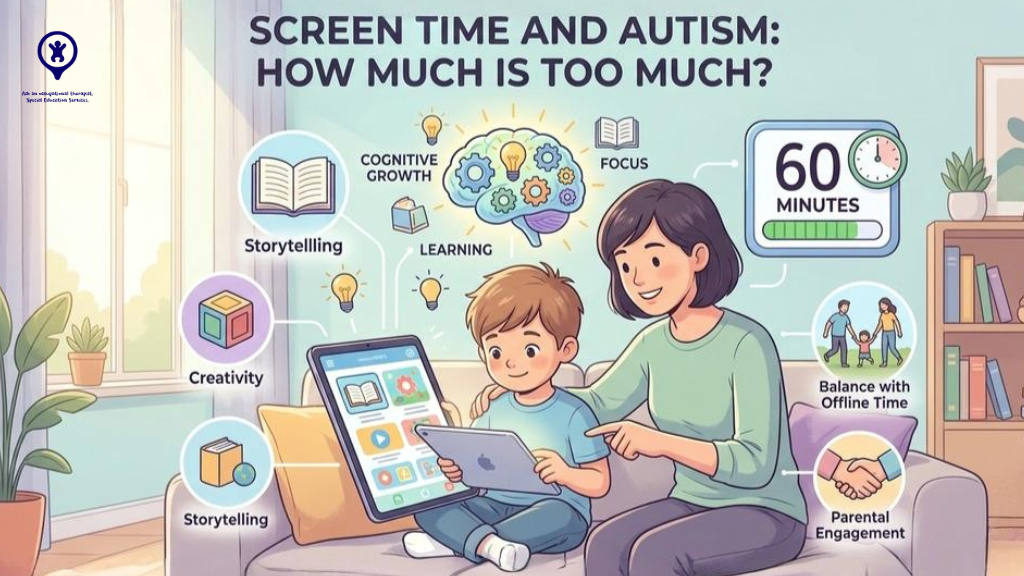
Rather than rigid hour limits, families tend to do better with a framework built around three honest questions: Is the content purposeful? Can the child transition away with reasonable support? Is screen time replacing or supplementing face-to-face interaction and therapy goals?
At an awareness centre for autism in Islamabad like AOT, therapists work with families to build what might be called a ‘screen diet’ — intentional choices about when screens are offered, for what purpose, and what comes before and after. Screens used to help a child wind down before a demanding therapy session are very different from unsupervised, unstructured access for hours after school. Context changes everything.
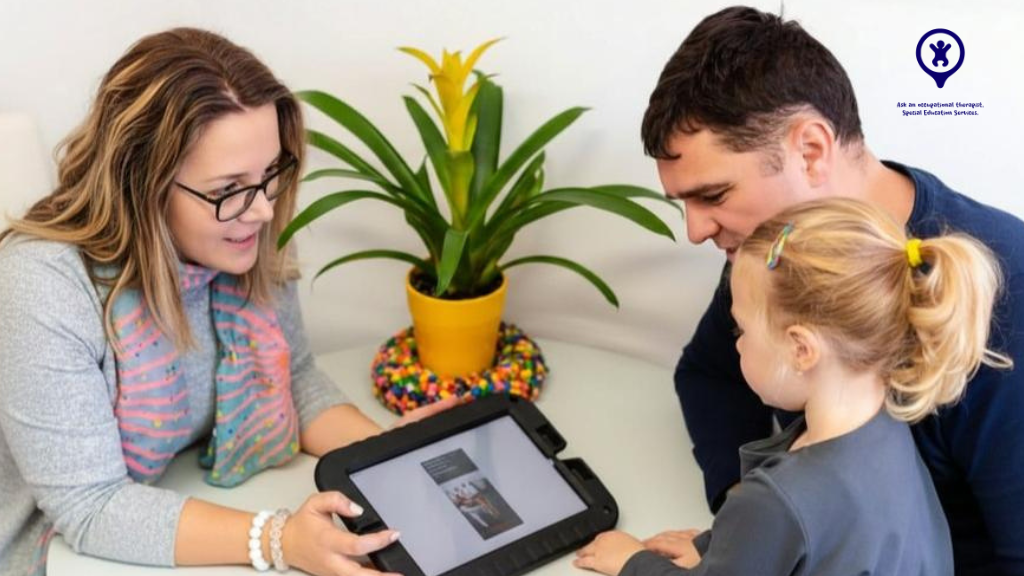
Co-viewing content whenever possible also makes a significant difference. Sitting with your child, narrating what is happening on screen, asking simple questions, and connecting the content to real-world objects or routines transforms passive viewing into a shared, language-rich interaction. As experienced practitioners delivering therapies for autism in Pakistan will tell you — it is rarely the device that determines the outcome, but the environment and the adult engagement surrounding it.
The Bottom Line for Families
Raising a child with autism in Pakistan comes with its own particular pressures — extended family opinions, limited access to accurate information, and sometimes the feeling that you are navigating everything without a clear map. Screen time guilt is real, and it is exhausting. The goal is not perfection. It is intentionality.
If you are concerned about your child’s relationship with screens, or if you want to understand how to integrate purposeful screen use alongside structuredtherapies for autism in Pakistan, reaching out to a qualified professional who understands the full picture is the right move. Our team at AOT — widely regarded as the best autism center in Islamabad — is here to help you make sense of it all. Because your child deserves support built around who they actually are, not who the internet assumes they should be.